


Page 27
P. 27
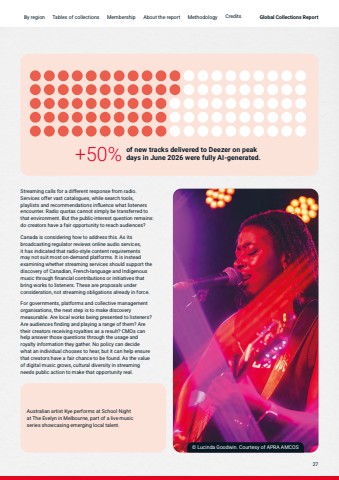
%u00a9 Lucinda Goodwin. Courtesy of APRA AMCOSStreaming calls for a different response from radio. Services offer vast catalogues, while search tools, playlists and recommendations influence what listeners encounter. Radio quotas cannot simply be transferred to that environment. But the public-interest question remains: do creators have a fair opportunity to reach audiences?Canada is considering how to address this. As its broadcasting regulator reviews online audio services, it has indicated that radio-style content requirements may not suit most on-demand platforms. It is instead examining whether streaming services should support the discovery of Canadian, French-language and Indigenous music through financial contributions or initiatives that bring works to listeners. These are proposals under consideration, not streaming obligations already in force.For governments, platforms and collective management organisations, the next step is to make discovery measurable. Are local works being presented to listeners? Are audiences finding and playing a range of them? Are their creators receiving royalties as a result? CMOs can help answer those questions through the usage and royalty information they gather. No policy can decide what an individual chooses to hear, but it can help ensure that creators have a fair chance to be found. As the value of digital music grows, cultural diversity in streaming needs public action to make that opportunity real.of new tracks delivered to Deezer on peak +50% days in June 2026 were fully AI-generated.Australian artist Kye performs at School Night at The Evelyn in Melbourne, part of a live music series showcasing emerging local talent. Global Collections Report27


